Airport Self Check-In Kiosk : Flying Just Got Easier – For decades, one of the most dreaded parts of flying has been the long and often chaotic check-in process. Passengers arriving at the airport must locate the right counter, wait in line, present documents, and hope the queue moves fast enough to make it through security in time. In large international hubs, this process can take well over an hour, adding stress to what should be a smooth journey.
Thankfully, modern technology is reshaping this aspect of air travel through the introduction of airport self check-in kiosks. These interactive terminals empower travelers to take charge of their check-in experience, reducing wait times, improving efficiency, and significantly enhancing customer satisfaction. Whether you’re a seasoned business traveler or a first-time flyer, these kiosks are quickly becoming the go-to solution for convenient airport navigation.
What is an Airport Self Check-In Kiosk?
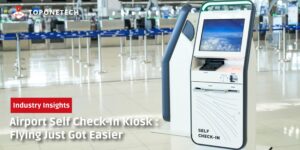
An airport self check-in kiosk is a standalone digital station, usually featuring a touchscreen interface, located in terminal departure areas. These kiosks allow passengers to perform tasks that were once only possible with the help of ground staff. With just a few taps on the screen, travelers can select their flight, confirm details, choose or change seats, print boarding passes, and in many cases, print baggage tags.
The kiosk is connected to the airline’s reservation and departure control systems, enabling real-time data syncing. This ensures that any changes or confirmations made via the kiosk are instantly updated in the airline’s system. Many kiosks are built to support a wide range of functions and are customized according to the airline’s branding and passenger needs.
This technology eliminates the need to stand in line at a manned counter and gives passengers a smoother start to their travel experience. For airlines and airports, these kiosks also reduce the need for front-line staff and help optimize space in busy terminal areas.
The Technology Behind the Touchscreen
Behind the sleek design and simple interface of a self check-in kiosk lies a complex blend of advanced hardware and software working in harmony. The touchscreen display is central to the kiosk experience. These displays typically use PCAP (Projected Capacitive) touch technology, which ensures high precision, quick response time, and multi-touch capabilities—essential for users who are in a rush.
The display is usually designed for high visibility, often with anti-glare and high-brightness features to ensure usability in brightly lit airport environments. Rugged enclosures and industrial-grade components allow the kiosk to withstand continuous use and exposure to dust, humidity, and accidental impact.
Additional components often include:
-
Barcode or QR Code Scanner: Reads boarding passes or confirmation codes from printed tickets or mobile devices.
-
Passport or ID Reader: Scans government-issued identification for verification purposes.
-
Thermal Printer: Instantly prints boarding passes and baggage tags.
-
Payment Terminal (Optional): Enables seat upgrades or excess baggage payments directly at the kiosk.
-
NFC/RFID Reader: Supports tap-and-go features for mobile boarding or ID verification.
This technological integration is managed by intelligent software systems that are regularly updated for security and efficiency. The user interface is designed to be intuitive, guiding the user through the check-in process step by step, often with visual aids and multilingual options.
How the Kiosk Enhances the Airport Experience
1. Reduced Waiting Times
One of the most appreciated advantages of airport self check-in kiosks is their ability to dramatically cut down the time passengers spend waiting. In traditional check-in setups, especially during peak hours, travelers might face long lines, limited counters, and overwhelmed airline staff. Self check-in kiosks bypass these issues by offering immediate service on a first-come, first-served basis.
Because these kiosks can process check-ins in under a few minutes, airports can keep queues moving swiftly. Even during high-traffic periods, such as holidays or major events, self check-in kiosks provide a consistent and scalable solution to passenger congestion.
2. 24/7 Availability
Unlike check-in counters that depend on staff schedules and may operate only during specific windows, self-service kiosks are available around the clock. This means passengers arriving early in the morning or late at night can still check in without delay. This level of availability adds immense flexibility and convenience, especially for international flights with odd-hour departures.
The 24/7 operational nature of kiosks also benefits airports and airlines, as they can serve passengers consistently throughout the day without incurring the high costs associated with staffing.
3. Passenger Empowerment
Self check-in kiosks put control back into the hands of passengers. Travelers can manage their own check-in process, review flight details, choose their preferred seats, and make changes as needed—all without feeling rushed by a line behind them or miscommunication with staff.
This empowerment leads to a more personalized travel experience. Passengers are free to explore the options provided by the airline, such as priority boarding or extra legroom, with clarity and confidence. By offering autonomy, kiosks increase satisfaction and make passengers feel more in control of their journey.
4. Multilingual Support
Airports cater to passengers from all over the world, and communication can often be a barrier at traditional counters, especially if staff are limited in language skills. Self check-in kiosks solve this issue by offering multilingual interfaces that allow users to select their preferred language at the beginning of the process.
This ensures a smoother, more inclusive experience for non-native speakers or travelers unfamiliar with local customs. It also reduces the chance of miscommunication, making the process faster and more accurate.
5. Accessibility Features
Inclusivity is a critical element in public space design, and modern self check-in kiosks are no exception. Many are built with accessibility in mind, offering height-adjustable screens for wheelchair users, audio assistance for the visually impaired, and large font options for passengers with limited vision.
Touchscreens are also calibrated for ease of use, requiring minimal pressure and supporting stylus or finger input. These features ensure that everyone, regardless of ability, can confidently navigate the check-in process independently.
Airport Self Check-In Kiosk – Airlines and Airports Leading the Way
The adoption of self check-in kiosks has been championed by some of the world’s most forward-thinking airlines and airports. Major international carriers like Delta Air Lines, Emirates, Lufthansa, Qatar Airways, and Singapore Airlines have integrated self-service check-in as a standard offering, enabling millions of passengers each year to benefit from faster processing and greater convenience.
Airports have followed suit. Facilities such as Changi Airport (Singapore), Heathrow (London), Los Angeles International Airport (LAX), and Amsterdam Schiphol have invested heavily in deploying hundreds of self check-in kiosks across terminals. In many of these airports, the check-in experience has been fully optimized, with automated bag drop systems placed just steps away from the kiosks, making for a seamless transition from check-in to baggage handling.
In some advanced installations, manufacturers integrate these kiosks with biometric systems, using facial recognition to verify identity and match passengers with boarding passes. These features not only enhance security but further streamline the travel process, setting new standards for the aviation industry.
Airport Self Check-In Kiosk – Self Check-In vs. Traditional Check-In: A Comparison
To understand the full impact of airport self check-in kiosks, it helps to compare them directly to traditional check-in methods. Each approach has its merits, but in most modern scenarios, the benefits of kiosks are increasingly clear.
| Feature | Traditional Check-In | Self Check-In Kiosk |
|---|---|---|
| Staff Assistance | Always required | Not needed |
| Average Speed | 10-15 minutes per person | 2-4 minutes per person |
| Queueing | Often long | Minimal or no queue |
| Accessibility | Depends on staff training | Built-in inclusive features |
| Availability | Limited to counter hours | 24/7 operation |
| Language Options | Often limited | Multilingual support |
| Personalization | Dependent on interaction | Full passenger control |
| Efficiency for Airlines | Higher staffing cost | Lower operational cost |
This comparison highlights how self-service technology improves both operational efficiency and the passenger experience.
Key Features That Make a Great Airport Self Check-In Kiosk
A successful self check-in kiosk is not just about a screen and a printer. Manufacturers thoughtfully designed this piece of technology to operate in high-traffic environments, offer intuitive interaction, and deliver consistent performance.
Here are the key features that make a self check-in kiosk stand out:
High-Quality Touchscreen Display
The heart of the kiosk is its screen. It should be responsive, durable, and easily visible in various lighting conditions. Anti-glare coating, high brightness levels, and PCAP technology ensure the display remains legible and touch-responsive even in brightly lit airport environments.
Rugged and Durable Enclosure
Airports handle high traffic, so manufacturers must build equipment to endure constant use. A durable, vandal-resistant metal enclosure with an industrial finish protects the hardware and ensures long service life with minimal maintenance.
Fast and Accurate Thermal Printer
Whether for boarding passes or baggage tags, printing speed and clarity matter. A high-speed thermal printer is a must for efficient processing and legibility. The printer should also offer easy maintenance and paper reloads to reduce downtime.
Flexible and Modular Design
Every airport is different, so a great kiosk should support modular customization. This includes integration options for passport scanners, payment terminals, biometric modules, or mobile device readers based on the airport or airline’s needs.
Seamless Software Integration
The software should be compatible with airline reservation systems and the airport’s IT infrastructure. Real-time data updates, secure encryption, and intuitive user interface design are essential for a flawless check-in experience.
Choose the Right Partner for Airport Self Check-In Kiosk Deployment
Behind every great self-service system is a manufacturer that understands both technology and the unique requirements of the aviation industry. Additionally, choosing the right airport kiosk supplier is critical for ensuring long-term reliability, scalability, and support.
Furthermore, here’s what to look for in a trusted partner:
-
Customization Capabilities: The supplier should offer customizable hardware and software tailored to the airport or airline brand identity and functional requirements.
-
Industrial-Grade Components: Manufacturers must build the kiosks with high-quality, long-lasting components capable of withstanding 24/7 use.
-
Touchscreen Expertise: As the most-used component of the kiosk, the touchscreen must be of the highest quality—offering responsiveness, durability, and clarity. Suppliers like Top One Tech specialize in providing PCAP touch displays specifically designed for demanding environments like airports.
-
Strong Technical Support: Fast deployment, comprehensive training, and reliable after-sales service are crucial to long-term success.
-
Proven Track Record: Choose a supplier with demonstrated experience in airport deployments and a portfolio of successful case studies.
Final Thoughts: The Sky’s the Limit with Smart Airport Self Check-In Kiosk
In conclusion, the aviation industry is evolving quickly, and the expectations of modern travelers are evolving with it. Furthermore, passengers today demand faster, smarter, and more flexible service—and airport self check-in kiosks meet that demand perfectly. By streamlining one of the most time-consuming steps in the travel process, they allow airports and airlines to enhance efficiency while delivering a better customer experience.
Additionally, with continued technological advancements and global adoption, these kiosks are no longer just a convenience—they are a necessity. Finally, as travelers, the next time we breeze through a terminal with a boarding pass in hand after just a few taps, we can appreciate how flying truly just got easier.
Top One Tech can customize Airport Self Check-In Kiosks specially designed for your application scenarios.
Contact us for further information :
Whatsapp/Call us at : +86 13631610695
Email : sales@toponetechmetal.com
See Also : Our Wide Range of Sheet Metal Products