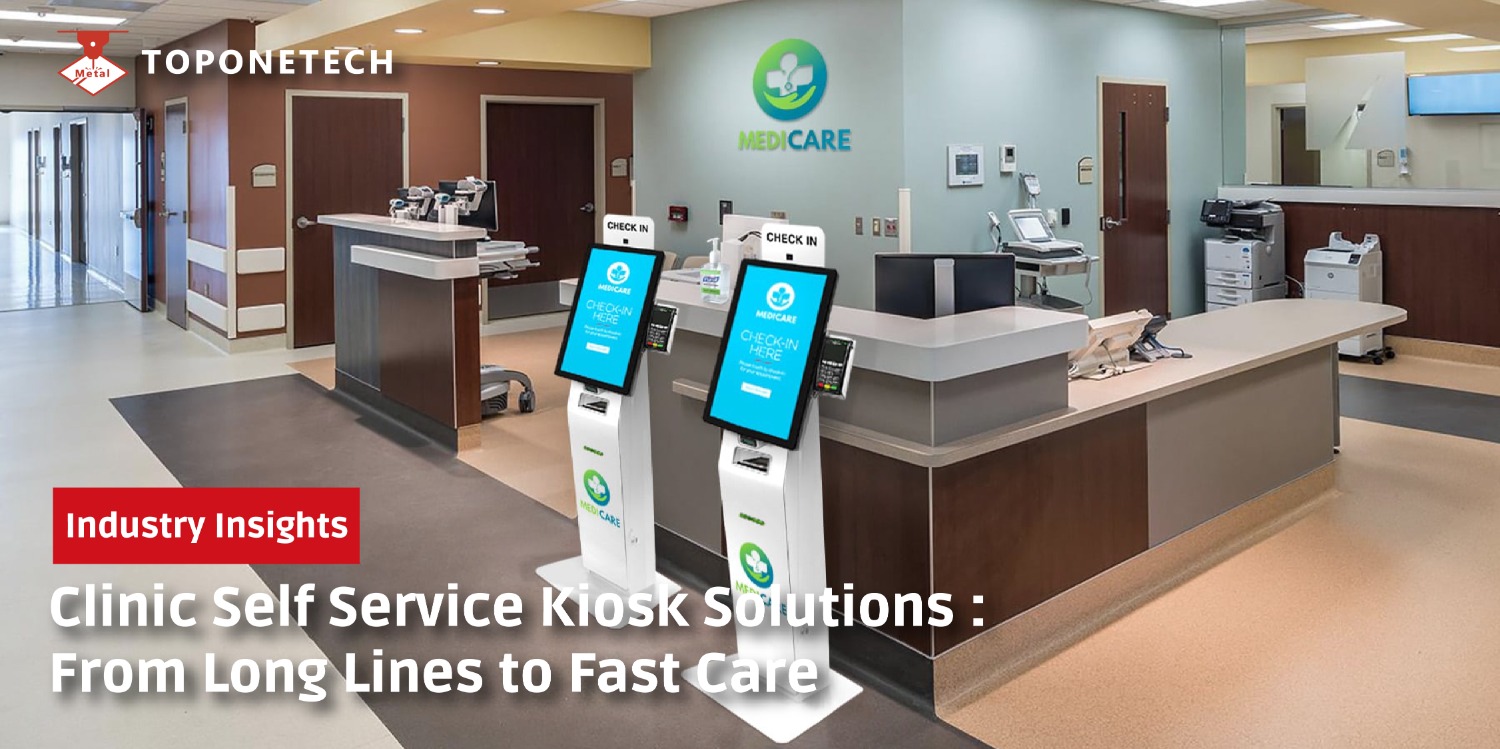
Clinic Self Service Kiosk Solutions : From Long Lines to Fast Care – Healthcare systems worldwide are experiencing an unprecedented increase in patient volume. Aging populations, chronic disease management, and preventive care awareness have all contributed to higher clinic traffic. At the same time, clinics face staff shortages, rising operational costs, and increasing regulatory demands. This imbalance creates long waiting times, overwhelmed front desk personnel, and frustrated patients.
Traditional check-in procedures rely heavily on manual paperwork and receptionist involvement. Patients fill out forms by hand, submit identification and insurance cards, and wait while staff manually input information into electronic medical record systems. Even minor delays can cause bottlenecks that affect the entire day’s schedule.
Clinic self service kiosk solutions directly address these pain points. By digitizing patient intake and automating repetitive administrative tasks, clinics reduce congestion at reception areas. Patients gain a faster, more efficient experience, while staff can dedicate their time to patient care rather than data entry. In an era where digital transformation defines competitive advantage, self service technology has become a necessity rather than an optional upgrade.
How Clinic Self Service Kiosks Work
A clinic self service kiosk is a fully integrated hardware and software solution designed to automate patient-facing administrative processes. The system typically includes a high-resolution touch screen display, integrated card readers, barcode or QR code scanners, receipt printers, and secure payment terminals. The kiosk software connects directly to appointment scheduling systems, billing platforms, and electronic medical records.
When patients arrive at the clinic, they can quickly locate their appointment using a QR code, ID card, phone number, or confirmation number. The kiosk then guides them step-by-step through the check-in process. Patients verify personal information, update insurance details, complete medical questionnaires, digitally sign consent forms, and handle outstanding payments—all within minutes.
Once the process is completed, the system automatically updates backend databases and alerts staff that the patient has arrived. This seamless integration ensures data accuracy and reduces duplicate entries. The intuitive user interface ensures that even elderly patients or those unfamiliar with technology can navigate the system easily with minimal assistance.
Reducing Long Lines and Waiting Times
Long queues at clinic reception areas often create negative first impressions. Patients who feel rushed or delayed may already feel anxious about their medical visit. A clinic self service kiosk solution eliminates this stress by accelerating the check-in process.
Traditional manual check-in can take several minutes per patient, especially when new forms must be completed or insurance details verified. When multiple patients arrive at the same time, lines form quickly. By contrast, multiple kiosks can operate simultaneously, allowing several patients to check in at once. This parallel processing significantly reduces waiting times and smooths patient flow throughout the day.
Additionally, kiosk systems often integrate with digital queue management platforms. Once patients complete check-in, they receive a queue number or notification. This organized flow reduces confusion and prevents overcrowding at the front desk. Clinics that implement these systems frequently report noticeable improvements in daily operational efficiency and patient satisfaction.
Enhancing Patient Experience and Satisfaction
Patient experience is now a key performance indicator in healthcare management. Patients compare healthcare services to other service industries, expecting convenience, speed, and privacy.
Self service kiosks empower patients to control their check-in process. Instead of sharing personal information aloud at a busy counter, patients can discreetly input sensitive data on a secure screen. This added privacy fosters trust and comfort, especially when discussing medical history or insurance matters.
Modern kiosks also support multilingual interfaces, making clinics more accessible to diverse communities. Language options ensure that patients understand instructions clearly, reducing misunderstandings and improving the accuracy of collected information.
In addition, contactless options such as QR scanning and digital payments minimize physical interaction. In post-pandemic healthcare environments, hygiene and safety remain top priorities. Clinics that offer contactless check-in demonstrate their commitment to patient well-being.
Overall, self service kiosks create a smoother, more modern patient journey—from arrival to consultation.
Improving Operational Efficiency
Beyond patient convenience, clinic self service kiosks dramatically improve internal efficiency. Administrative tasks consume a large portion of clinic resources. Front desk staff must handle paperwork, verify insurance eligibility, answer routine questions, and collect payments. These repetitive duties can slow productivity and increase the likelihood of errors.
By automating these tasks, kiosks reduce administrative workload. Staff members can redirect their efforts toward assisting patients with special needs, coordinating care, and handling complex inquiries. This shift improves both staff morale and operational productivity.
Furthermore, when patients input their own information, the risk of transcription errors decreases. Accurate data entry leads to fewer billing disputes and rejected insurance claims. Digital documentation eliminates paper clutter and ensures instant record storage within electronic systems. This streamlined workflow improves overall clinic performance and contributes to long-term sustainability.
Increasing Revenue Collection Efficiency
Financial stability is crucial for any healthcare provider. Missed co-payments and delayed billing processes can negatively impact cash flow. A clinic self service payment kiosk ensures that financial transactions occur promptly and efficiently.
During check-in, the system can automatically notify patients of outstanding balances or required co-payments. Integrated payment terminals allow patients to complete transactions using credit cards, debit cards, or contactless payment methods. Receipts can be printed instantly or sent digitally.
This immediate payment process reduces administrative follow-ups and improves collection rates. Patients are more likely to settle balances when prompted during check-in rather than after leaving the clinic. Over time, this automated approach strengthens revenue management and reduces financial leakage.
Supporting Healthcare Digital Transformation
Digital transformation is reshaping healthcare delivery. Clinics are moving toward paperless systems, integrated data platforms, and smart facility management. Self service kiosks serve as an essential gateway in this digital ecosystem.
When integrated with electronic medical records and appointment scheduling systems, kiosks provide real-time data updates. Clinics gain insights into patient arrival patterns, peak hours, and workflow efficiency. This data-driven approach enables better resource planning and improved decision-making.
Additionally, kiosks contribute to the development of smart clinics where technology enhances every stage of the patient journey. From digital registration to automated billing and notification systems, the entire experience becomes seamless and interconnected.
Adopting clinic self service kiosk solutions signals a forward-thinking approach that aligns with modern healthcare standards.
Security and Compliance Considerations
Healthcare data security is paramount. Patient information includes sensitive medical and financial details that require strict protection. A reliable clinic self service kiosk solution incorporates advanced security features to safeguard data integrity.
Encrypted data transmission ensures that information remains protected during transfer between the kiosk and backend systems. Secure authentication methods prevent unauthorized access. Role-based access control restricts system permissions to authorized personnel only.
Compliance with healthcare privacy regulations is also essential. A well-designed kiosk solution aligns with applicable regulatory standards, ensuring that patient data remains confidential and protected at all times.
By prioritizing cybersecurity and compliance, clinics can confidently deploy self service technology without compromising trust.
Customization for Different Clinic Types
Every clinic operates differently. A general practice clinic has different workflow requirements compared to a diagnostic center or dental practice. Clinic self service kiosk solutions are highly adaptable to various healthcare environments.
Primary care clinics benefit from streamlined check-in processes and quick insurance verification. Specialty clinics often require detailed intake forms tailored to specific conditions. Kiosk software can present customized questionnaires that align with medical specialties, ensuring accurate data collection before consultation.
Diagnostic centers can use kiosks for appointment scheduling, consent form completion, and report collection. Dental clinics can integrate digital forms and payment processing to reduce front desk workload.
Customization ensures that the kiosk complements existing workflows rather than disrupts them. This flexibility allows clinics of all sizes to implement solutions that match their operational goals.
Key Features to Look for in a Clinic Self Service Kiosk
Selecting the right kiosk solution requires careful evaluation of hardware durability and software capability. Healthcare environments demand equipment that can withstand continuous use while maintaining hygiene standards.
High-brightness touch screens with anti-glare coatings ensure clear visibility under various lighting conditions. Durable enclosures protect internal components and support long-term reliability. ADA-compliant designs ensure accessibility for patients with disabilities.
Software compatibility is equally important. Seamless integration with EMR systems, billing platforms, and queue management software guarantees smooth operations. Remote monitoring capabilities allow IT teams to update and manage kiosks efficiently.
Choosing a high-quality, medical-grade kiosk ensures consistent performance and long-term return on investment.
Implementation Strategy for Maximum Impact
Successful deployment of clinic self service kiosks requires strategic planning. Technology alone cannot guarantee success; proper implementation ensures optimal results.
Staff training is critical. Employees must understand how to guide patients through the kiosk process and troubleshoot minor issues. Clear signage and intuitive on-screen instructions encourage patient adoption.
Clinics may begin with a hybrid model, maintaining traditional reception services while introducing kiosks gradually. This phased approach allows patients and staff to adjust comfortably.
Continuous evaluation and feedback collection help refine the system. Over time, clinics can optimize workflows to maximize efficiency and patient satisfaction.
Cost vs. Long-Term ROI
While initial investment costs may seem significant, clinic self service kiosks provide substantial long-term benefits. Reduced staffing requirements for repetitive administrative tasks translate into cost savings. Paperless documentation lowers printing and storage expenses.
Improved billing efficiency enhances revenue collection. Faster check-in processes increase patient throughput, allowing clinics to serve more patients without expanding physical space.
When evaluated over several years, the return on investment often surpasses initial expenditure. Clinics that adopt digital solutions position themselves for sustainable growth and operational resilience.
Future Trends in Clinic Self Service Kiosk Solutions
The evolution of clinic self service kiosk solutions continues as technology advances. Future developments focus on enhancing convenience and integration. Facial recognition authentication may streamline patient identification while maintaining security standards. Mobile-to-kiosk integration will allow patients to begin check-in on their smartphones and complete it instantly upon arrival.
Voice-assisted interfaces may improve accessibility for elderly patients or those with visual impairments. Telemedicine integration modules can connect patients directly with remote healthcare providers when necessary.
These innovations will further refine the digital patient journey and reinforce the role of kiosks as central touchpoints in modern healthcare facilities.
Top One Tech, Clinic Self Service Kiosk Solutions That You Can Trust
When selecting a clinic self service kiosk provider, reliability, customization capability, and long-term support are essential considerations. Top One Tech delivers comprehensive clinic self service kiosk solutions designed to meet the evolving needs of healthcare facilities worldwide.
With extensive experience in touch display technology and industrial-grade hardware manufacturing, Top One Tech offers durable, high-performance kiosks suitable for demanding medical environments. Each solution integrates seamlessly with clinic management systems, ensuring smooth operation and accurate data synchronization.
Top One Tech emphasizes customization, allowing clinics to tailor hardware design, screen size, mounting options, and software integration according to operational requirements. In addition, from compact wall-mounted units for small clinics to freestanding kiosks for high-traffic hospitals, solutions are engineered for efficiency and longevity.
Moreover, with a commitment to quality control, security compliance, and responsive technical support, Top One Tech stands as a trusted partner for healthcare providers seeking to transition from long lines to fast, intelligent care delivery.
Conclusion: Clinic Self Service Kiosk Solutions – From Long Lines to Fast, Efficient Care
In conclusion, clinic self service kiosk solutions represent a transformative advancement in healthcare administration. Furthermore, by reducing waiting times, enhancing patient privacy, improving data accuracy, and optimizing financial processes, kiosks modernize the clinic experience.
Moreover, as healthcare continues to evolve toward digital integration, clinics that adopt intelligent self service systems gain a competitive edge. In addition, they deliver faster service, strengthen operational performance, and create a patient-centered environment built on efficiency and innovation.
Finally, the journey from long lines to fast care is no longer a vision of the future—it is a practical reality made possible through clinic self service kiosk solutions.
Top One Tech can manufacture Clinic Self Service Kiosk specially designed for your application scenarios.
Contact us for further information :
Whatsapp/Call us at : +86 13631610695
Email : sales@toponetechmetal.com
See Also : Our Wide Range of Sheet Metal Products