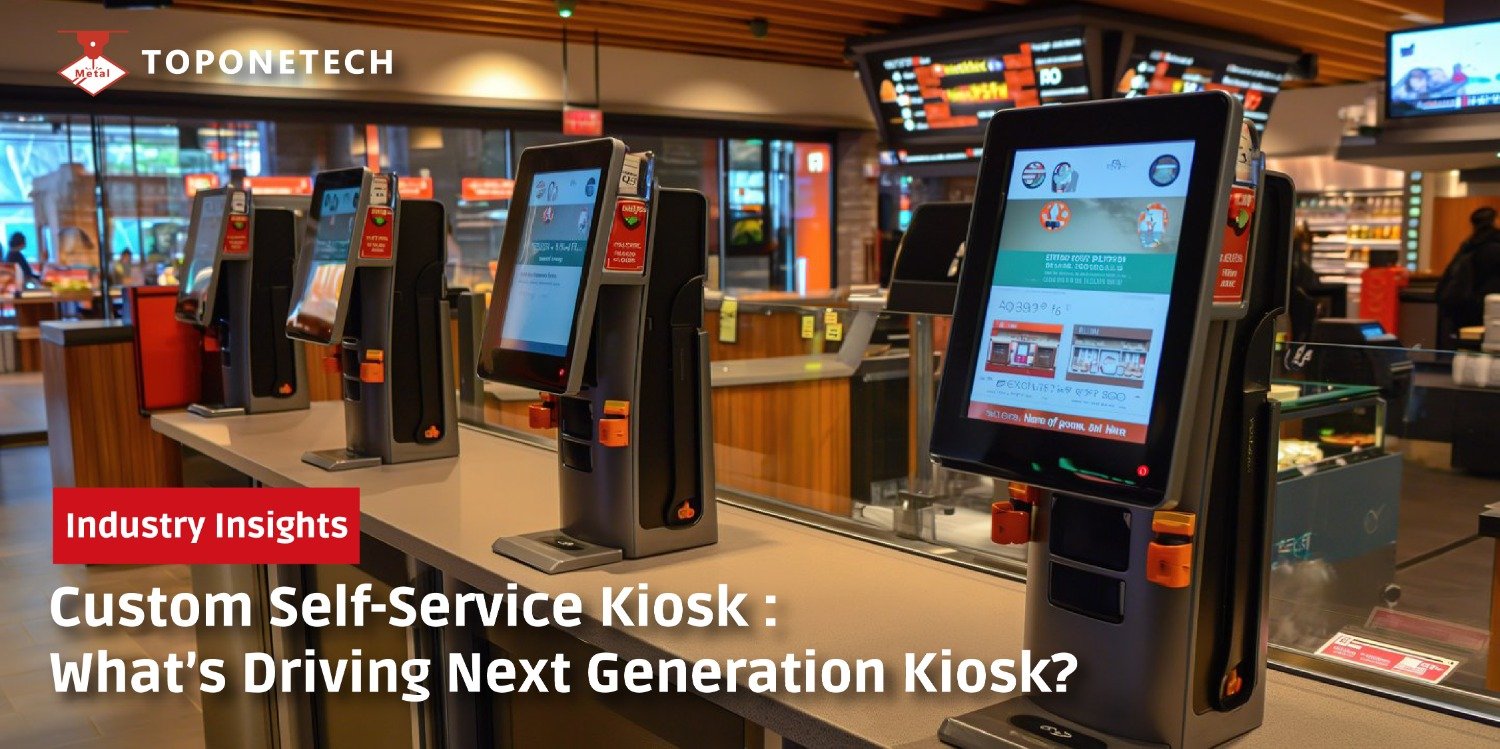
Custom Self-Service Kiosk : What’s Driving Next Generation Kiosk? – Self-service kiosks have become an essential part of modern customer experiences. From retail stores and restaurants to hospitals, airports, banks, casinos, and public transportation hubs, businesses increasingly rely on interactive kiosk technology to simplify transactions, reduce waiting times, and improve operational efficiency.
However, the next generation of kiosks is moving beyond traditional touchscreen terminals. Today’s businesses require more than a standard display and payment interface. They need customized solutions that combine durable hardware, intuitive software interfaces, secure payment systems, flexible configurations, and seamless integration with existing business operations.
This evolution is driving demand for the custom self-service kiosk, a solution designed around specific industry requirements, customer journeys, and operational environments.
Unlike off-the-shelf products, custom kiosks can be engineered with specific screen sizes, cabinet structures, payment modules, barcode scanners, printers, cameras, card readers, and connectivity options. Businesses can also customize the appearance, materials, mounting methods, and software compatibility to align with their branding and technical requirements.
For OEMs, system integrators, and equipment manufacturers, the opportunity is clear: next-generation kiosk technology is no longer just about enabling self-service. It is about creating integrated, scalable, and reliable customer-facing systems.
So, what is driving this transformation, and how can businesses select the right custom kiosk manufacturing partner?
1. Rising Demand for Faster and More Convenient Customer Experiences


Customer expectations are changing across nearly every service industry. People increasingly expect to complete routine tasks independently, without waiting for staff assistance or navigating complicated service procedures.
Self-service kiosks help businesses meet these expectations by providing accessible, consistent, and convenient digital interfaces.
Reducing Waiting Times and Improving Service Efficiency
In quick-service restaurants, customers can browse menus, customize orders, and complete payments through self-ordering kiosks. In retail environments, interactive kiosks can support product searches, inventory checks, and loyalty program registration.
Similarly, transportation hubs can use self-service terminals for ticket purchases, check-in procedures, and travel information. Healthcare facilities can deploy kiosks for patient registration, appointment check-ins, and queue management.
These applications allow employees to focus on tasks that require personal attention while customers handle routine transactions independently.
Why Customization Matters
Different businesses have different workflows. A restaurant kiosk may require a payment terminal and receipt printer, while a hospital registration kiosk may need an identification scanner, document reader, and privacy-conscious screen positioning.
A custom self-service kiosk manufacturer can integrate these components into a single enclosure, helping businesses create a more organized and consistent user experience.
The result is a kiosk solution that supports the actual service process rather than forcing businesses to adapt their operations to a generic device.
2. Advanced Touchscreen Technology Is Reshaping Kiosk Design


The touchscreen remains one of the most important components of a self-service kiosk. As interactive applications become more sophisticated, businesses are demanding displays that deliver responsive touch performance, clear visuals, and dependable operation.
Larger Displays and More Intuitive Interfaces
Larger touchscreen displays provide additional space for product catalogs, interactive maps, multimedia content, and step-by-step transaction instructions.
Depending on the application, businesses may choose compact screens for simple transactions or larger displays for complex workflows and digital signage integration.
Custom kiosk designs can incorporate landscape, portrait, wide-format, or specialized display configurations to suit the available installation space and user experience requirements.
Projected Capacitive Touch Technology
Projected capacitive (PCAP) touchscreens are widely used in modern kiosks because they support responsive multi-touch interaction and a smooth glass front surface.
Alternative technologies, including infrared and surface acoustic wave touchscreens, may also be appropriate depending on screen size, operating conditions, and application requirements.
Selecting the right technology involves evaluating touch accuracy, durability, environmental exposure, cleaning requirements, and the intended user interface.
High-Brightness Displays for Outdoor Applications
Outdoor kiosks face additional challenges, including sunlight, temperature fluctuations, dust, moisture, and potential vandalism.
High-brightness displays, anti-glare treatments, appropriate sealing, and thermal management can improve usability and reliability in demanding environments.
Businesses should evaluate the complete kiosk enclosure and display assembly together, rather than choosing a touchscreen based on brightness or size alone.
A well-designed custom touchscreen kiosk combines display performance, mechanical integration, and environmental protection to meet the needs of its intended location.
3. Custom Self-Service Kiosk – AI, Automation, and Smarter Customer Interactions
Artificial intelligence is becoming an important driver of next-generation kiosk development. Rather than simply displaying fixed menus or transaction screens, advanced kiosks can support more adaptive and personalized interactions.
Industry discussions in 2026 increasingly highlight edge computing, computer vision, and AI-assisted customer journeys as emerging directions for self-service technology.
AI-Powered Recommendations and Customer Guidance
In retail and food service, intelligent kiosk software can recommend relevant products, suggest complementary purchases, or guide users through complicated selections.
In hotels, airports, and public venues, conversational interfaces may help visitors locate services or navigate unfamiliar environments. These capabilities depend on suitable software, data access, and computing resources.
Integrating AI with Custom Kiosk Hardware
A custom kiosk can be designed to accommodate cameras, microphones, sensors, and more powerful computing platforms when the application requires them.
However, AI should solve a clearly defined business problem rather than simply increase product complexity. Businesses must consider privacy, processing requirements, network connectivity, and maintenance before selecting AI-enabled features.
Edge computing can also allow certain functions to operate locally, reducing dependence on continuous cloud communication. This can be useful when response time, connectivity, or data handling is especially important.
4. Custom Self-Service Kiosk – Contactless Payments and Multiple Interaction Methods


Payment convenience is another major factor shaping kiosk design. Customers increasingly expect options that match their preferred payment methods, including contactless cards, mobile wallets, QR codes, and conventional card transactions.
Integrated Payment and Identification Modules
Depending on the application, a custom self-service kiosk may incorporate:
-
NFC and contactless payment terminals.
-
EMV-compatible card readers where required.
-
QR and barcode scanners.
-
Receipt and ticket printers.
-
Membership card readers.
-
Identification and document scanning modules.
Integrating these components into the cabinet can create a cleaner installation and reduce the need for separate peripherals.
Moving Beyond Touch-Only Interfaces
The touchscreen remains valuable, but it can work alongside mobile applications, voice commands, QR codes, and other interaction methods.
For example, customers might begin a transaction on a smartphone and complete it at a kiosk. A visitor could scan a QR code to retrieve a booking, while another customer might prefer navigating the entire process through the touchscreen.
This multimodal approach gives businesses more flexibility without requiring them to abandon familiar touchscreen technology.
5. Custom Self-Service Kiosk – Custom Metal Cabinets and Modular Hardware Design
The physical enclosure is just as important as the display and software. A kiosk must accommodate its components, withstand its operating environment, and remain practical to manufacture, install, and maintain.
Designing Around Industry Requirements
A custom kiosk cabinet can be manufactured in different shapes, sizes, and materials depending on its intended use.
Freestanding kiosks are suitable for shopping centers and transportation terminals. Countertop units work well in smaller retail spaces, while wall-mounted models help maximize available floor space.
Outdoor applications may require weather-resistant construction, secure access panels, protective coatings, and carefully designed ventilation.
For specialized installations, manufacturers can customize sheet-metal structures, mounting brackets, cable routing, ventilation openings, and service compartments.
Modular Components Improve Maintainability
Modular hardware allows individual components to be replaced or upgraded without redesigning the entire machine.
For example, a payment terminal may need replacement independently of the touchscreen. A printer compartment might require additional service access, while a computing module may need upgrading as software requirements change.
Planning these details during the design stage can simplify maintenance and help control long-term operating costs.
For businesses purchasing large quantities of kiosks, modular construction can also make product variations easier to manage across different markets.
6. Custom Self-Service Kiosk – Accessibility, Ergonomics, and Inclusive Design
A next-generation kiosk should be easy to use for customers with different abilities, ages, languages, and levels of technical confidence.
Making Interfaces Easier to Navigate
Clear instructions, readable text, strong contrast, large touch targets, and straightforward navigation can reduce user errors.
Multilingual interfaces help serve international visitors, while audio prompts, captioning, and compatible assistive technologies can improve accessibility for users with specific needs.
Getting Physical Design Right
Screen height, viewing angle, reach distance, payment terminal position, and wheelchair access should all be considered during product development.
Requirements vary by jurisdiction and application, so businesses should review relevant accessibility standards before finalizing their kiosk specifications.
An effective custom kiosk combines accessible software with practical mechanical design. This improves usability for a wider audience and can help organizations meet applicable procurement and compliance requirements.
7. Custom Self-Service Kiosk – Cloud Connectivity, Remote Monitoring, and Fleet Management
As businesses deploy kiosks across multiple locations, managing individual machines becomes increasingly difficult. Remote monitoring and centralized management can help operators oversee their equipment more efficiently.
Real-Time Monitoring and Maintenance
Connected kiosks may report device status, software errors, peripheral failures, and network problems to a central management platform.
For example, an operator could receive an alert when a receipt printer runs out of paper or when a kiosk loses its network connection.
Remote software updates can also help organizations maintain consistent configurations across multiple sites, subject to security and operational controls.
Designing Hardware for Connected Operations
A custom self-service kiosk can incorporate Ethernet, Wi-Fi, cellular connectivity, and other interfaces according to deployment requirements.
Manufacturers should also consider secure access to internal components, reliable power management, thermal performance, and sufficient computing capacity.
Remote management depends on the complete system, including hardware, operating software, network infrastructure, and management applications. These elements should be evaluated together during project planning.
8. Custom Self-Service Kiosk – Industry-Specific Customization Is Becoming a Competitive Advantage


There is no universal kiosk design that meets every industry’s requirements. The next generation of self-service equipment is increasingly shaped by specialized applications.
Retail and Hospitality
Retailers need kiosks that support product discovery, self-checkout, promotions, and loyalty programs. Furthermore, restaurants require efficient ordering workflows, payment integration, and receipt printing.
Hotels can use customized terminals for guest check-in, reservation verification, and key-card distribution.
Healthcare and Public Services
Hospitals and clinics may require patient registration, appointment management, document scanning, and privacy-conscious interfaces. Government service centers can use kiosks for information access, form submission, and queue management.
These environments may also require specific security, accessibility, and data-protection measures.
Transportation, Gaming, and Industrial Applications
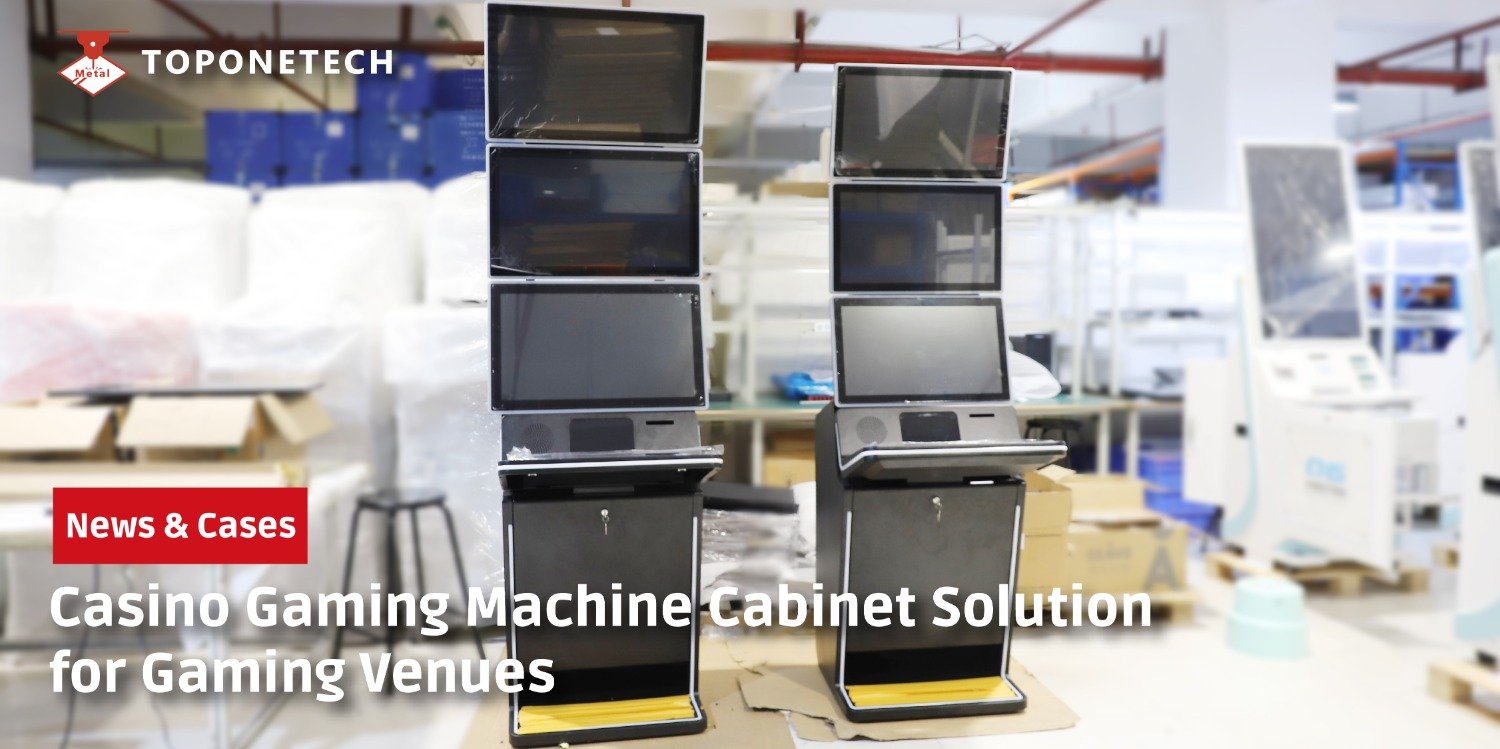
Transportation operators use kiosks for ticketing, passenger information, and self-service check-in. Casinos and gaming equipment manufacturers may require integrated displays, custom metal cabinets, lighting assemblies, and specialized control interfaces.
Furthermore, industrial environments may demand rugged enclosures, glove-compatible touchscreens, and displays suitable for challenging operating conditions.
Additionally, for these applications, custom kiosk OEM/ODM manufacturing enables businesses to combine specialized hardware and mechanical design into a single solution.
9. Custom Self-Service Kiosk – Cost Optimization Through OEM and ODM Manufacturing
Businesses developing kiosk products must balance initial investment, performance, customization, and long-term reliability.
Moreover, working directly with an experienced OEM/ODM manufacturer can simplify coordination between touchscreen production, metal fabrication, component integration, and final assembly.
OEM vs. ODM: Which Model Is Right for Your Business?
| Factor | OEM Manufacturing | ODM Manufacturing |
|---|---|---|
| Product design | Based on the buyer’s specifications | Manufacturer provides an existing or developed design |
| Customization | Adapted to the buyer’s requirements | Customized around an established platform |
| Development process | Suitable for buyer-led engineering | Can reduce design workload |
| Best suited for | Established products and proprietary designs | New products and faster development |
Some projects combine both approaches. A manufacturer may adapt an existing kiosk platform while producing a custom cabinet, display configuration, and peripheral layout.
Reducing Total Cost of Ownership
The lowest purchase price does not necessarily produce the lowest operating cost.
Additionally, businesses should evaluate component quality, energy consumption, maintenance access, spare-part availability, expected service life, and shipping expenses.
Combining the touchscreen, sheet-metal cabinet, and assembly process under one manufacturing partner can also reduce coordination between suppliers.
Furthermore, for projects involving multiple kiosk models or large deployments, standardized components and modular designs may help simplify procurement and maintenance.
10. How to Choose the Right Custom Self-Service Kiosk Manufacturer
Selecting a manufacturing partner is a critical step in turning a kiosk concept into a reliable commercial product.
Before placing an order, businesses should evaluate the following factors.
1. Engineering and customization capabilities: Confirm whether the manufacturer can support mechanical design, touchscreen integration, cabinet fabrication, and customized peripheral layouts.
2. Display expertise: Review available screen sizes, touch technologies, brightness levels, optical performance, and environmental protection options.
3. Manufacturing and assembly capacity: Ask about production processes, quality control, prototyping, and the ability to support future volume increases.
4. Component integration: Verify that payment devices, scanners, printers, computers, and other modules can be integrated and tested as a complete system.
5. Quality assurance: Review incoming component inspections, functional testing, aging procedures, and inspection records. Relevant certifications should be confirmed for the actual product and target market.
6. Communication and project management: Clear technical documentation, sample approvals, revision control, and agreed delivery milestones help reduce development risks.
7. After-sales support: Discuss warranty terms, spare parts, repair procedures, and technical support for deployed units.
A capable manufacturing partner should help identify potential engineering issues before mass production, not simply build according to a drawing.
11. Why Top One Tech Is a Partner to Consider for Custom Self-Service Kiosk Projects
Top One Tech provides OEM/ODM manufacturing solutions for businesses seeking customized touchscreen displays, touch monitors, self-service kiosks, and integrated metal products.
Additionally, with manufacturing experience dating back to 2010, the company supports projects that require coordination between display technology, industrial design, and customized hardware.
Integrated Touchscreen and Metal Fabrication Capabilities
Through its touchscreen and metal manufacturing capabilities, Top One Tech can support projects involving:
-
Custom touchscreen displays and open-frame monitors.
-
Self-service kiosk hardware and metal enclosures.
-
Customized cabinet structures and mounting solutions.
-
Integrated display and peripheral configurations.
-
OEM/ODM product development for specialized applications.
Moreover, these capabilities are relevant to system integrators, equipment brands, and businesses seeking to consolidate multiple hardware requirements within one project.
From Design to Production
A successful kiosk project begins with a clear specification. Additionally, screen dimensions, brightness, touch technology, computing platform, peripheral requirements, installation environment, and expected production volume should be defined early.
From there, engineering discussions can establish the mechanical design, component layout, prototype requirements, and production plan.
This process helps buyers identify potential compatibility issues before committing to larger quantities.
Furthermore, for businesses developing a new self-service product or upgrading an existing machine, Top One Tech can be considered as a potential manufacturing partner for customized touchscreen and metal assembly requirements.
Moreover, to explore a project, buyers can share their drawings, target specifications, estimated order quantity, and intended application to discuss a suitable OEM/ODM solution.
12. What Does the Future Hold for Custom Self-Service Kiosk?
The future of self-service kiosks will be shaped by the convergence of intelligent software, flexible hardware, connected operations, and better customer experiences.
Moreover, several developments are likely to remain important.
-
More adaptive interfaces: AI-assisted guidance and personalization can make transactions more relevant and efficient.
-
Flexible interaction methods: Touchscreens will increasingly work alongside voice, QR codes, mobile devices, and contactless technologies.
-
Greater emphasis on serviceability: Modular components and easier access to replaceable hardware can simplify maintenance.
-
Connected kiosk fleets: Remote diagnostics, centralized updates, and performance monitoring can support larger deployments.
-
Application-specific engineering: Businesses will continue to require specialized configurations for retail, healthcare, transportation, gaming, and industrial environments.
-
Lifecycle-focused procurement: Buyers will pay closer attention to reliability, maintainability, and total cost of ownership.
Furthermore, these trends suggest that the most effective kiosks will not necessarily be the ones with the most features. They will be the ones that solve a defined operational problem while remaining easy to use, maintain, and scale.
Conclusion: Building the Next Generation of Custom Self-Service Kiosks
The next generation of custom self-service kiosks is being driven by demand for faster transactions, better touchscreen experiences, intelligent automation, flexible payments, accessible interfaces, and connected operations.
At the same time, hardware remains fundamental. Moreover, display quality, metal cabinet construction, component integration, thermal management, and serviceability all influence the performance of a finished kiosk.
Furthermore, for businesses developing specialized self-service equipment, customization provides the flexibility to align hardware with real-world operational needs. Working with an experienced OEM/ODM manufacturer can help coordinate design, production, and integration while supporting future product development.
Additionally, Top One Tech offers touchscreen and metal manufacturing capabilities for businesses exploring customized kiosk solutions. Whether the project involves retail checkout, healthcare registration, transportation ticketing, or specialized gaming equipment, the right combination of engineering and manufacturing can help turn a concept into a practical commercial product.
Finally, looking for a custom self-service kiosk manufacturing partner? Contact Top One Tech to discuss your product requirements, technical drawings, and OEM/ODM development goals.
Top One Tech can manufacture Custom Self-Service Kiosk specially designed for your application scenarios.
Contact us for further information :
Whatsapp/Call us at : +86 13631610695
Email : sales@toponetechmetal.com
See Also : Our Wide Range of Sheet Metal Products