Self Service Kiosk Design and Manufacturing – Self service kiosks have become an essential part of modern business operations. Whether customers are ordering food at a restaurant, checking in at a hospital, purchasing tickets at a transportation hub, paying bills at a financial institution, or accessing information at a government office, self-service kiosks provide a fast, convenient, and efficient experience while helping organizations reduce operating costs.
As customer expectations continue to evolve, businesses are looking for digital solutions that minimize waiting times, improve service quality, and operate around the clock. Self service kiosks address these challenges by combining intuitive touchscreen technology, reliable hardware, intelligent software, and durable industrial-grade enclosures into one integrated solution.
However, building a successful kiosk involves much more than installing a touchscreen into a metal cabinet. A professional kiosk requires thoughtful industrial design, precision engineering, high-quality manufacturing, electronic integration, rigorous quality control, and comprehensive testing to ensure long-term performance in demanding environments.
Whether you are developing a payment kiosk, ticketing terminal, self-ordering station, healthcare check-in kiosk, visitor management system, or information kiosk, selecting the right design and manufacturing partner is one of the most important decisions you will make.
This guide explains the complete process of self service kiosk design and manufacturing, helping you understand how to create a reliable, scalable, and customized kiosk solution for your next project.
Why Self Service Kiosks Continue to Grow Worldwide
The global adoption of self service kiosks has accelerated rapidly as organizations seek smarter ways to improve efficiency and customer satisfaction. Digital transformation, labor shortages, and increasing demand for contactless services have encouraged businesses across industries to invest in kiosk technology.
Unlike traditional service counters, self service kiosks allow customers to complete transactions independently. This reduces employee workload while enabling businesses to serve more customers in less time.
Some of the primary benefits include:
- Faster customer service and reduced waiting times
- Lower operational and labor costs
- Improved transaction accuracy
- Consistent customer experiences
- 24/7 service availability
- Increased sales opportunities through digital promotions
- Better data collection and reporting
- Enhanced operational efficiency
Today’s kiosks are used in retail stores, airports, hotels, hospitals, banks, educational institutions, entertainment venues, transportation systems, smart cities, libraries, and government agencies. Their versatility makes them one of the most valuable investments for organizations seeking to modernize customer interactions.
What Is Self Service Kiosk Design?
Self service kiosk design is the process of planning, engineering, and developing a kiosk that combines functionality, durability, aesthetics, and user-friendly operation. It involves multiple engineering disciplines working together to produce a product that performs reliably in public environments.
Unlike consumer electronic devices, kiosks are designed for continuous daily operation. They must withstand heavy usage, resist accidental damage, protect internal components, and remain easy to maintain throughout their service life.
Professional kiosk design typically includes:
- Industrial product design
- Mechanical engineering
- Electrical engineering
- Structural analysis
- Human-machine interface (HMI) planning
- User experience optimization
- Thermal management
- Security system integration
- Component layout optimization
- Manufacturing feasibility analysis
An effective design not only looks attractive but also simplifies installation, maintenance, and future upgrades while supporting long-term reliability.
The Complete Self Service Kiosk Manufacturing Process
1. Requirement Analysis and Project Planning
Every successful kiosk project begins with understanding the customer’s objectives and technical requirements. During this stage, engineers and project managers gather detailed information about the intended application, operating environment, and desired functionality.
Important considerations include:
- Indoor or outdoor installation
- Floor-standing, desktop, or wall-mounted design
- Target users and accessibility requirements
- Screen size and touch technology
- Operating system compatibility
- Payment methods
- Required peripherals
- Environmental conditions
- Production volume
- Certification requirements
A comprehensive requirement analysis reduces development risks and ensures that the finished kiosk meets customer expectations.
2. Industrial Design
Industrial design determines the kiosk’s overall appearance and user interaction. Designers create concepts that align with the customer’s brand identity while ensuring ergonomic operation and an intuitive user experience.
Factors considered during industrial design include:
- Modern and attractive appearance
- Screen viewing angle
- Comfortable operating height
- Accessibility for users with disabilities
- Internal maintenance access
- Cable management
- Stability and structural balance
- Branding opportunities
The goal is to produce a kiosk that is visually appealing while remaining practical for everyday use.
3. Mechanical Engineering and Structural Design
Once the industrial design is approved, mechanical engineers transform the concept into a manufacturable product using advanced 3D CAD software.
Structural engineering ensures the kiosk can support internal components while withstanding frequent public use. Engineers analyze weight distribution, structural strength, ventilation pathways, and mounting locations for each hardware component.
This stage also includes designing lockable access doors, service panels, mounting brackets, cable routing systems, and cooling airflow to maximize durability and simplify maintenance.
4. Precision Sheet Metal Fabrication
The kiosk cabinet is manufactured using precision sheet metal fabrication. Furthermore, industrial-grade steel or aluminum provides the strength needed for long-term operation in public environments.
The fabrication process typically includes:
- CNC laser cutting
- CNC punching
- Precision bending
- Welding
- Grinding and polishing
- Surface treatment
- Powder coating
- Silk-screen printing
Moreover, accurate fabrication ensures excellent dimensional consistency, professional appearance, and reliable assembly.
5. Hardware Integration
A modern self service kiosk combines multiple electronic systems into one integrated solution. Furthermore, engineers carefully install and connect each component to ensure compatibility and stable operation.
Common hardware includes:
- Industrial touchscreen displays
- Embedded industrial computers
- Android or Windows motherboards
- Thermal receipt printers
- Barcode and QR code scanners
- RFID and NFC readers
- EMV payment terminals
- Cameras
- Speakers and microphones
- UPS power modules
- Network communication devices
Proper hardware integration improves system stability while simplifying future maintenance.
6. Assembly and System Integration
During assembly, technicians install all mechanical and electronic components following standardized production procedures.
Moreover, every cable is carefully routed, connectors are secured, and internal wiring is organized to improve airflow and simplify servicing.
Each assembled kiosk undergoes functional verification to ensure every component operates correctly before entering the testing stage.
7. Quality Control and Reliability Testing
Quality assurance is one of the most critical stages of kiosk manufacturing. Every finished unit should undergo comprehensive testing before shipment.
Typical inspections include:
- Touchscreen calibration
- Display quality inspection
- Printer performance testing
- Barcode scanner verification
- Camera functionality
- Network communication testing
- Audio testing
- USB interface verification
- Aging tests
- High-temperature testing
- Low-temperature testing
- Vibration testing
- Electrical safety inspection
- Final appearance inspection
Furthermore, comprehensive testing helps ensure reliable operation throughout the kiosk’s service life.
Key Components of a Self Service Kiosk
The performance of any self service kiosk depends largely on the quality of its core components.
Touchscreen Display
The touchscreen is the primary interface between users and the kiosk. Projected capacitive (PCAP) touch technology is widely used because it supports multi-touch gestures, high accuracy, and excellent optical clarity.
Moreover, important display considerations include screen size, brightness, resolution, tempered glass protection, anti-glare coating, and viewing angles.
Industrial Computer
Industrial computers provide stable, long-term performance and are designed for continuous operation. Furthermore, compared with consumer PCs, they offer improved durability, extended product availability, and better resistance to environmental conditions.
Payment System
Payment kiosks often support multiple payment methods, including EMV chip cards, magnetic stripe cards, contactless NFC payments, QR codes, and mobile wallets. Integrating secure payment hardware enables businesses to serve more customers while improving convenience.
Thermal Printer
Receipt printers remain essential for retail, banking, transportation, and healthcare applications. High-speed thermal printers reduce customer waiting times while providing reliable operation with minimal maintenance.
Barcode and QR Scanner
Scanners enable users to validate tickets, redeem coupons, access loyalty programs, verify identities, and complete mobile payments. Furthermore, choosing industrial-grade scanners improves accuracy and reduces scanning failures.
Indoor vs. Outdoor Kiosk Design
They have significantly different engineering requirements.
Indoor kiosks prioritize aesthetics, compact footprints, and user-friendly designs. Since they operate in controlled environments, they generally require lower display brightness and less environmental protection.
Furthermore, outdoor kiosks must withstand rain, dust, sunlight, humidity, and temperature fluctuations. Moreover, they often feature IP-rated enclosures, high-brightness displays, corrosion-resistant materials, waterproof sealing, and advanced cooling systems to ensure reliable operation under harsh conditions.
Understanding the operating environment during the design stage helps prevent costly redesigns and extends product lifespan.
Self Service Kiosk Design and Manufacturing – Custom OEM and ODM Self Service Kiosk Manufacturing
Every business has unique operational needs, making customization one of the most important aspects of kiosk manufacturing. Moreover, OEM and ODM services allow businesses to create kiosks tailored to their branding, technical requirements, and application scenarios.
Furthermore, customization options include:
- Cabinet dimensions
- Corporate branding
- Display sizes
- Touch technologies
- Processor configurations
- Memory and storage
- Payment systems
- Printers
- Cameras
- Biometric devices
- RFID readers
- Passport scanners
- QR code scanners
- Operating systems
- Communication interfaces
Whether producing a prototype, a small pilot run, or high-volume production, OEM and ODM manufacturing enables businesses to launch differentiated products that align with their market objectives.
Self Service Kiosk Design and Manufacturing – Industries That Benefit from Self Service Kiosks
Self service kiosks are widely used across numerous industries because they improve efficiency while enhancing customer experiences.
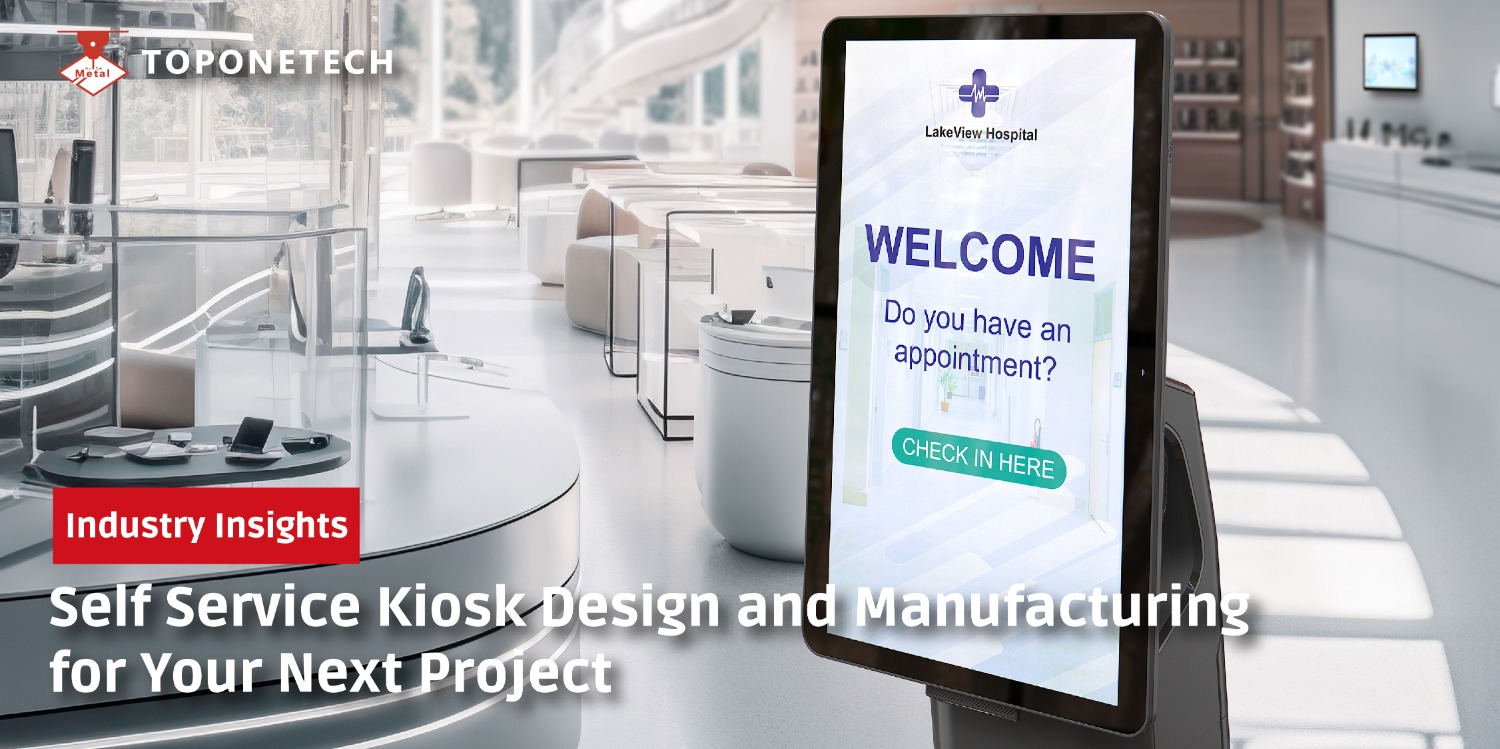
Moreover, retail businesses use kiosks for product browsing, self-checkout, inventory inquiries, and loyalty programs. In addition, restaurants deploy self-ordering kiosks to reduce queues and increase average order values. Furthermore, hospitals streamline patient registration and appointment check-ins using healthcare kiosks.
Moreover, banks utilize self-service terminals for deposits, withdrawals, account inquiries, and bill payments. Additionally, Airports and transportation providers improve passenger flow with ticketing and check-in kiosks. Furthermore, government agencies use kiosks for document applications, tax payments, identity verification, and public information services.
In addition, as digital transformation continues, kiosk applications continue expanding into education, logistics, manufacturing, entertainment, hospitality, and smart city infrastructure.
Self Service Kiosk Design and Manufacturing – Important Factors When Choosing a Self Service Kiosk Manufacturer
Choosing the right manufacturing partner has a direct impact on product quality, project timelines, and long-term reliability.
Additionally, look for a manufacturer with proven experience in industrial design, engineering, sheet metal fabrication, touch display integration, electronics assembly, and quality management. Furthermore, a factory with in-house production capabilities provides better quality control, shorter lead times, and greater flexibility for customization.
It is also important to evaluate engineering capabilities, prototyping services, certification support, manufacturing capacity, testing procedures, and after-sales service. Moreover, a reliable partner should assist throughout the entire product lifecycle—from concept development and prototyping to production, deployment, and ongoing technical support.
Self Service Kiosk Design and Manufacturing – Why Work with Top One Tech, an Experienced Self Service Kiosk Manufacturer?
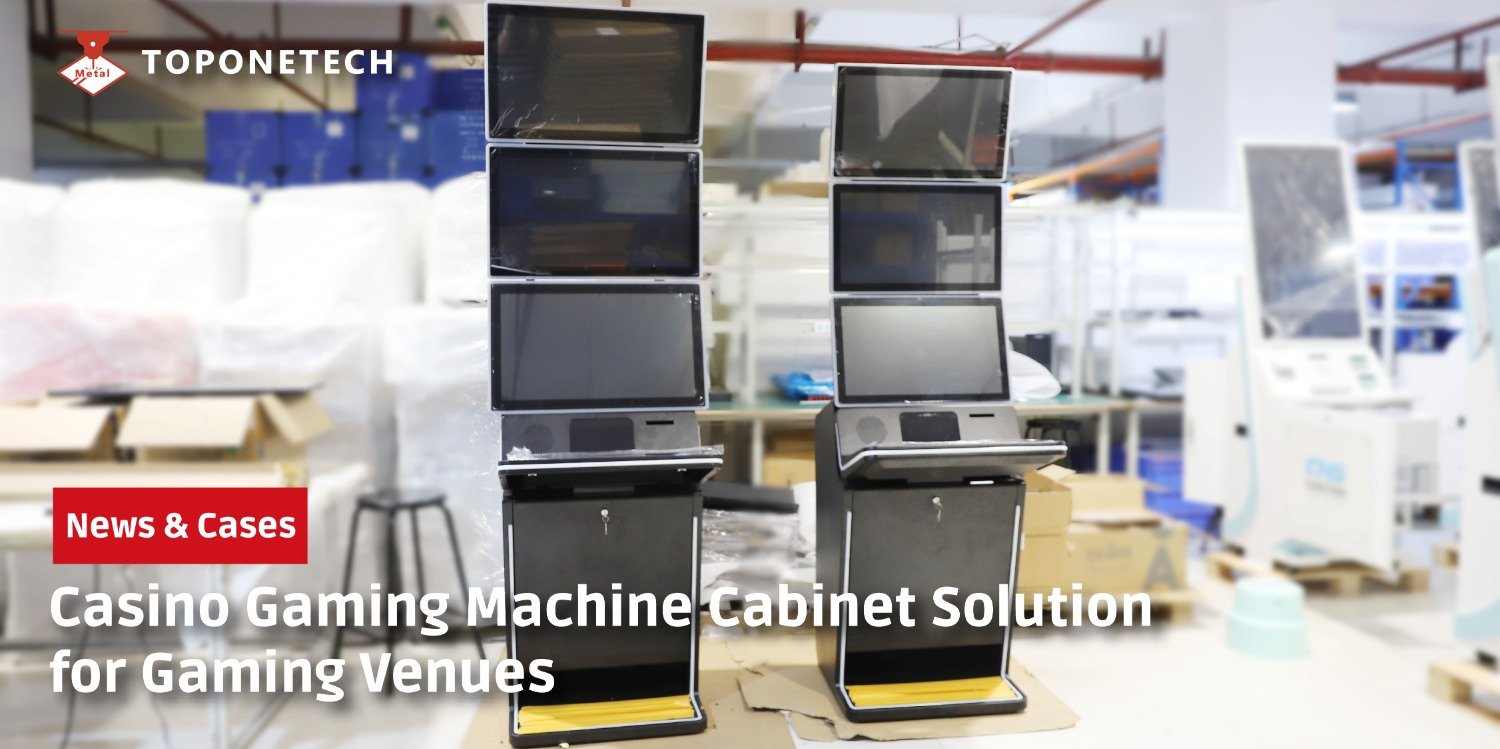
Top One Tech is a trusted OEM and ODM manufacturer specializing in custom touch display solutions, self service kiosks, casino gaming machine assemblies, and precision sheet metal fabrication. With more than 15 years of manufacturing experience, the company provides comprehensive design, engineering, production, and assembly services for customers worldwide.
Moreover, from initial product concepts to full-scale manufacturing, Top One Tech offers end-to-end project support under one roof. Furthermore, its experienced engineering team works closely with customers to develop customized kiosk solutions tailored to specific industries, applications, and branding requirements.
Additionally, Top One Tech’s manufacturing capabilities include precision sheet metal fabrication, CNC laser cutting, bending, welding, powder coating, touchscreen integration, electronics assembly, and complete system testing. In addition, every kiosk is produced using strict quality control procedures to ensure reliable long-term performance.
Furthermore, the company supports projects ranging from functional prototypes and low-volume production to large-scale OEM manufacturing. Whether you require payment kiosks, healthcare terminals, retail self-ordering systems, ticketing kiosks, banking terminals, or industrial automation solutions, Top One Tech delivers customized products designed to meet international quality standards and customer expectations.
By combining advanced manufacturing technology, experienced engineers, flexible customization, and responsive customer support, Top One Tech helps businesses accelerate product development while reducing manufacturing risks and achieving faster time-to-market.
Conclusion
Self service kiosks have become indispensable tools for organizations seeking to improve customer service, streamline operations, and support digital transformation. A successful kiosk project requires far more than attractive hardware—it demands careful planning, intelligent engineering, precision manufacturing, reliable component integration, and rigorous quality assurance.
Whether your project involves retail, healthcare, banking, transportation, hospitality, or government services, partnering with an experienced OEM and ODM manufacturer ensures your kiosk is built to deliver exceptional performance and long-term reliability.
Moreover, with comprehensive engineering expertise, advanced manufacturing capabilities, and a commitment to quality, Top One Tech is well positioned to help businesses transform innovative ideas into high-performance self service kiosk solutions that meet today’s operational needs and tomorrow’s growth opportunities.
Top One Tech can manufacture Self Service Kiosks specially designed for your application scenarios.
Contact us for further information :
Whatsapp/Call us at : +86 13631610695
Email : sales@toponetechmetal.com
See Also : Our Wide Range of Sheet Metal Products